
Buy R-134a Refrigerant Gas — Wholesale HFC Refrigerant
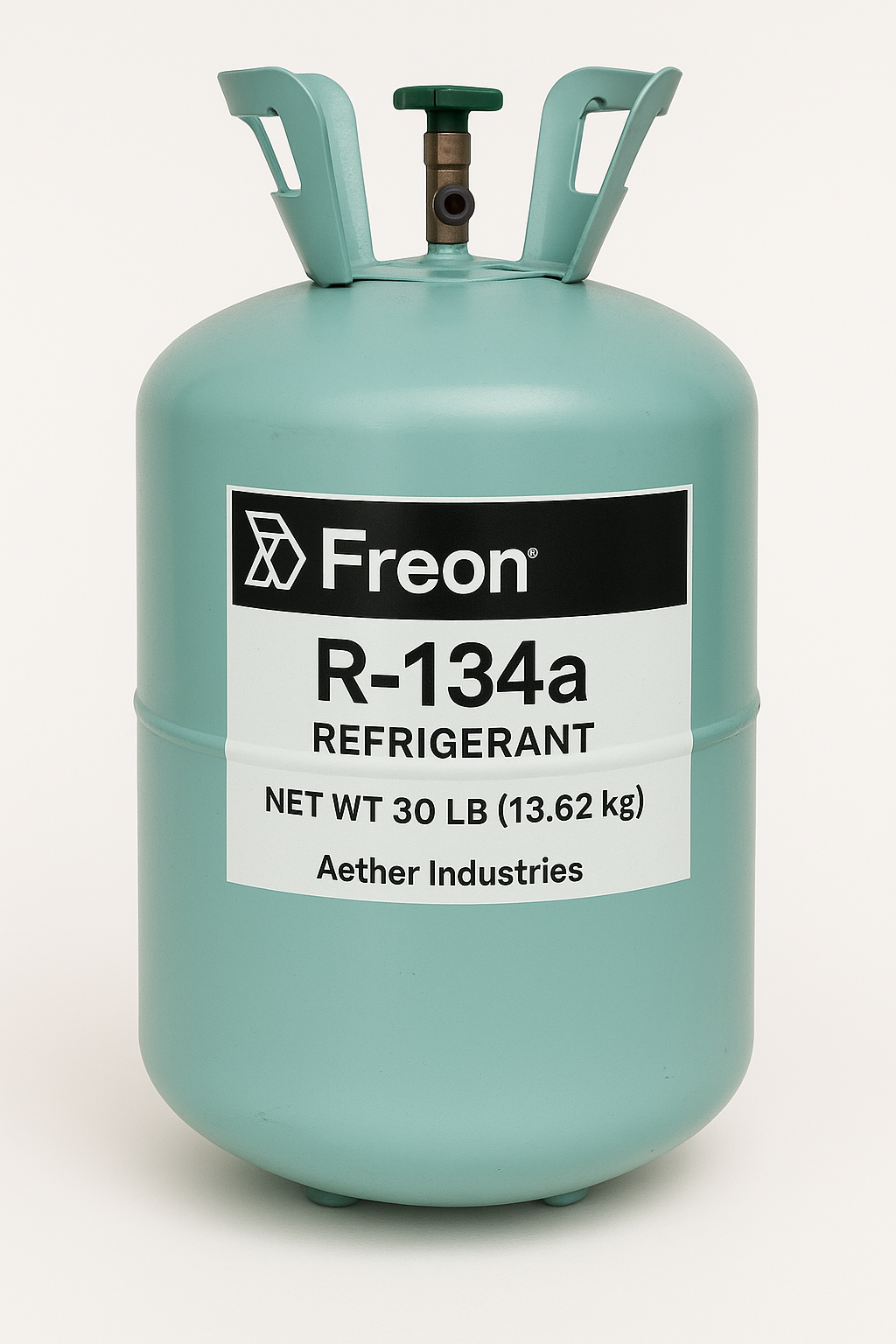
Buy R-134a Refrigerant Gas — Wholesale HFC Refrigerant for compatible automotive air-conditioning, commercial refrigeration, chillers, appliances, and R-12 replacement applications. R-134a, also known as HFC-134a, is a widely established hydrofluorocarbon refrigerant with zero ozone depletion potential and an ASHRAE A1 safety classification.
R-134a was developed as a replacement for R-12 and became widely used in mobile air conditioning and refrigeration applications. It continues to be used for servicing compatible existing equipment and in applications where R-134a remains an approved refrigerant.
For wholesale requirements, refrigeration distributors, HVAC contractors, automotive service companies, industrial users, commercial operators, and export customers can request bulk pricing, cylinder options, availability, documentation, and shipping information.
R-134a Refrigerant Gas — Wholesale HFC Refrigerant Overview
R-134a is a single-component HFC refrigerant identified by the ASHRAE designation R-134a. The chemical name is 1,1,1,2-tetrafluoroethane, with the molecular formula CH₂FCF₃ and CAS Registry Number 811-97-2.
R-134a has an A1 safety classification, indicating lower toxicity and no flame propagation under the applicable ASHRAE classification system. It has zero ozone depletion potential (ODP) because it does not contain chlorine.
R-134a has been used extensively in automotive air conditioning, commercial refrigeration, chillers, domestic appliances, and other compatible refrigeration systems.
Why Buy R-134a Refrigerant Gas?
R-134a remains an important refrigerant for the service and maintenance of equipment specifically designed or approved for R-134a.
Key Benefits
- Established HFC refrigerant technology
- ASHRAE A1 classification
- Nonflammable under the applicable classification
- Zero ozone depletion potential
- Widely used in automotive air conditioning
- Suitable for compatible commercial refrigeration
- Used in suitable chiller applications
- Used in compatible refrigeration appliances
- Developed as an R-12 replacement
- Available for commercial and wholesale supply
- Suitable for servicing compatible existing equipment
- Supported by established technical documentation
R-134a Technical Specifications
| Property | R-134a Refrigerant Gas |
|---|---|
| Product Name | R-134a Refrigerant Gas |
| Common Name | HFC-134a |
| Freon Product | Freon™ 134a |
| ASHRAE Designation | R-134a |
| Chemical Name | 1,1,1,2-Tetrafluoroethane |
| Chemical Formula | CH₂FCF₃ |
| CAS Number | 811-97-2 |
| Refrigerant Type | HFC |
| Refrigerant Classification | Single-component refrigerant |
| ASHRAE Safety Class | A1 |
| Flammability | Nonflammable |
| Ozone Depletion Potential | 0 |
| Primary Historical Replacement | R-12 |
| Main Applications | Automotive AC, refrigeration, chillers, appliances |
| Supply Form | Refrigerant Gas |
| Commercial Supply | Wholesale / Bulk |
R-134a Refrigerant Applications
Automotive Air Conditioning
R-134a has been widely used in automotive and mobile air-conditioning systems. It was adopted as a replacement for R-12 in many vehicle air-conditioning applications.
Suitable applications can include:
- Passenger vehicle air conditioning
- Automotive service and maintenance
- Mobile air-conditioning systems
- Commercial vehicle AC
- Selected transport refrigeration applications
Before charging an automotive system, always verify the refrigerant specified for that particular vehicle.
Commercial Refrigeration
R-134a is used in selected commercial refrigeration systems where the equipment is designed for the refrigerant.
Applications may include:
- Commercial refrigerators
- Display equipment
- Food-storage refrigeration
- Beverage cooling
- Medium-temperature refrigeration
- Refrigerated equipment
- Commercial cooling systems
The correct refrigerant depends on the equipment design, operating temperature, compressor, expansion device, and applicable regulations.
Chillers
R-134a has been used in suitable chiller applications, including systems designed around R-134a operating characteristics.
Potential applications include:
- Commercial chillers
- Industrial chillers
- Process cooling
- Water-cooled chillers
- Air-cooled chillers
- Existing compatible R-134a systems
R-134a may also be used as an R-12 replacement in certain chiller applications where the equipment and retrofit procedure permit it.
Refrigeration Appliances
R-134a has historically been used in various refrigeration appliances and cooling equipment.
Examples include:
- Refrigerators
- Freezers
- Beverage coolers
- Cooling cabinets
- Refrigerated equipment
- Other compatible appliances
Always confirm the refrigerant designation on the equipment nameplate before charging.
R-134a as an R-12 Replacement
R-134a was developed as an alternative to CFC-12, commonly known as R-12.
R-12 is a CFC refrigerant with ozone-depleting properties, while R-134a has zero ozone depletion potential. This made R-134a an important replacement refrigerant for many applications during the transition away from CFC refrigerants.
However, converting an R-12 system to R-134a should not be treated as a simple refrigerant substitution. The equipment manufacturer’s retrofit requirements should be followed, including requirements for lubricant, seals, fittings, charging procedure, and system labeling.
R-134a Oil and Lubricant Compatibility
Lubricant selection depends on the equipment and application.
Many systems designed for R-134a use polyolester (POE) oil, although the specific lubricant requirement depends on the compressor and equipment manufacturer.
When retrofitting an older R-12 system, do not automatically assume that the existing lubricant is suitable for R-134a.
Before retrofit:
- Confirm the compressor manufacturer’s requirements.
- Check the equipment service documentation.
- Determine the correct lubricant.
- Follow the specified oil-change procedure where required.
- Confirm proper oil circulation and return.
R-134a Refrigerant Charging
R-134a should be charged according to the equipment manufacturer’s specifications.
The correct refrigerant charge depends on:
- System capacity
- Compressor
- Condenser
- Evaporator
- Expansion device
- Refrigerant circuit design
- Operating temperature
- System configuration
Avoid charging solely based on pressure. Proper system commissioning should consider the manufacturer’s specified charge, operating pressures, temperature conditions, superheat, subcooling, and other applicable service parameters.
R-134a Performance
R-134a has established thermodynamic properties that have supported its use across automotive AC, refrigeration, chillers, and appliances.
Actual system performance depends on:
- Compressor efficiency
- Condenser size
- Evaporator design
- Expansion device
- Refrigerant charge
- Ambient temperature
- Evaporating temperature
- Condensing temperature
- Airflow
- Heat-load conditions
- Lubricant
- System cleanliness
Therefore, performance can vary considerably between different equipment designs.
Buy R-134a Refrigerant Gas Wholesale
We supply R-134a Refrigerant Gas for wholesale and commercial requirements.
Wholesale customers can request:
- Bulk R-134a refrigerant
- Commercial quantities
- Cylinder supply
- Refrigeration distributor supply
- Automotive refrigerant supply
- HVAC service supply
- Industrial refrigeration supply
- Chiller refrigerant supply
- Export quantities
- Project-based supply
- Product documentation
- Shipping arrangements
For a wholesale quotation, provide the required quantity, cylinder size, destination, and intended application.
R-134a Refrigerant Gas for Automotive AC
R-134a has been one of the most widely recognized refrigerants for automotive air conditioning.
For automotive service, technicians should first confirm the vehicle’s specified refrigerant. Some newer vehicles use different refrigerants, so R-134a should only be used when the vehicle or system is designed and approved for it.
For compatible R-134a vehicle systems, proper recovery, evacuation, leak testing, charging, and system commissioning should be performed using appropriate service equipment.
R-134a Refrigerant Gas for Refrigeration
R-134a can be used in compatible refrigeration systems designed around its pressure-temperature and thermodynamic characteristics.
It may be encountered in:
- Commercial refrigeration
- Beverage coolers
- Refrigerated cabinets
- Food-storage equipment
- Chillers
- Industrial cooling systems
- Refrigeration appliances
The equipment nameplate and manufacturer’s documentation should always be checked before selecting R-134a.
R-134a Refrigerant Gas Safety and Handling
R-134a should be handled by trained personnel using appropriate refrigeration service equipment and procedures.
Important Safety Practices
- Review the current Safety Data Sheet (SDS).
- Use approved refrigerant cylinders.
- Use suitable recovery equipment.
- Do not intentionally vent refrigerant.
- Avoid breathing concentrated refrigerant vapor.
- Ensure adequate ventilation.
- Keep cylinders away from excessive heat.
- Protect cylinders from physical damage.
- Use appropriate personal protective equipment.
- Follow applicable local regulations.
- Confirm the refrigerant before charging.
- Do not mix different refrigerants unless specifically permitted by the equipment and manufacturer.
Although R-134a is classified A1 and nonflammable under the applicable classification, concentrated refrigerant vapor can displace oxygen in confined spaces. Appropriate ventilation and handling procedures are therefore important.
R-134a vs R-12
| Feature | R-134a | R-12 |
|---|---|---|
| Refrigerant Family | HFC | CFC |
| Chemical Type | HFC-134a | CFC-12 |
| Ozone Depletion Potential | 0 | Ozone-depleting |
| ASHRAE Safety Class | A1 | A1 |
| Flammability | Nonflammable | Nonflammable |
| Primary Role | R-12 replacement | Older refrigerant |
| Automotive AC | Widely used in compatible systems | Older systems |
| Refrigeration | Compatible applications | Older systems |
| Chillers | Compatible applications | Older systems |
| Retrofit | Possible for suitable systems | Existing systems |
R-134a was introduced as an alternative to R-12 for many applications because of its zero ozone depletion potential.
R-134a and Environmental Considerations
R-134a has zero ozone depletion potential, but it is an HFC refrigerant with a significant global warming impact. Consequently, regulations governing HFC refrigerants have become increasingly important in many markets.
Requirements can vary according to:
- Country
- Region
- Equipment type
- Application
- Refrigerant charge
- Date of manufacture
- New equipment versus existing equipment
Before purchasing or installing R-134a, check the regulations applicable to the intended application and destination market.
R-134a Refrigerant Storage
Store R-134a cylinders according to the manufacturer’s safety requirements.
Recommended practices include:
- Store cylinders in a cool, dry, well-ventilated location.
- Keep cylinders away from direct sunlight.
- Keep cylinders away from excessive heat.
- Secure cylinders against falling or rolling.
- Keep cylinder valves protected.
- Do not expose cylinders to temperatures outside their rated limits.
- Use only approved containers designed for refrigerant service.
Who Buys R-134a Refrigerant Gas?
R-134a is commonly relevant to businesses and professionals involved in:
- Automotive air-conditioning service
- HVAC maintenance
- Refrigeration maintenance
- Commercial refrigeration
- Industrial refrigeration
- Chiller service
- Appliance servicing
- Refrigerant distribution
- HVAC wholesale
- Refrigeration wholesale
- Equipment maintenance
Buy R-134a Refrigerant Gas — Wholesale Supply
For wholesale purchasing, customers should provide:
Product: R-134a Refrigerant Gas
Refrigerant: R-134a / HFC-134a
Bulk orders can be quoted according to quantity, packaging, destination, availability, and applicable shipping requirements.
Frequently Asked Questions
What is R-134a Refrigerant Gas?
R-134a is an HFC refrigerant known chemically as 1,1,1,2-tetrafluoroethane. It has been widely used in automotive air conditioning, refrigeration, chillers, appliances, and compatible R-12 replacement applications.
Is R-134a an HFC refrigerant?
Yes. R-134a is a hydrofluorocarbon refrigerant, commonly referred to as HFC-134a.
Is R-134a the same as HFC-134a?
Yes. R-134a and HFC-134a refer to the same refrigerant, 1,1,1,2-tetrafluoroethane.
Is R-134a a replacement for R-12?
R-134a was developed and widely adopted as a replacement for R-12 in many applications. Retrofit suitability depends on the equipment and manufacturer’s requirements.
Is R-134a flammable?
R-134a has an ASHRAE A1 classification and is classified as nonflammable under the applicable standard.
Does R-134a deplete the ozone layer?
No. R-134a has zero ozone depletion potential.
Is R-134a used in car air conditioning?
Yes. R-134a has been widely used in automotive and mobile air-conditioning systems. The vehicle’s specified refrigerant should always be confirmed before service.
Can R-134a be used for refrigeration?
Yes. R-134a is used in suitable commercial refrigeration, chillers, appliances, and other refrigeration equipment designed for R-134a.
Does R-134a require POE oil?
Lubricant requirements depend on the system. Many R-134a systems use POE oil, but the correct lubricant must be confirmed from the equipment or compressor manufacturer.
Can R-134a be used in an R-12 system?
R-134a can be used for suitable R-12 retrofit applications, but the system may require changes to lubricant, service fittings, seals, labels, or other components. Follow the manufacturer’s retrofit procedure.
Can R-134a be mixed with R-12?
Refrigerants should not be mixed unless specifically permitted by the equipment manufacturer and applicable technical procedures. Existing refrigerant should be properly recovered before a retrofit.
Can I buy R-134a Refrigerant Gas wholesale?
Yes. R-134a is commercially supplied for compatible automotive, refrigeration, HVAC, chiller, and industrial applications. Wholesale availability depends on supplier, quantity, packaging, destination, and regulations.
What is the chemical formula of R-134a?
The chemical formula of R-134a is CH₂FCF₃. Its chemical name is 1,1,1,2-tetrafluoroethane.
What is the CAS number for R-134a?
The CAS Registry Number for R-134a is 811-97-2.
Related Refrigerant Products
Customers searching for R-134a may also be interested in:
- R-404A Refrigerant
- R-407C Refrigerant
- R-410A Refrigerant
- R-507 Refrigerant
- R-422B Refrigerant
- R-438A Refrigerant
- R-437A Refrigerant
- R-32 Refrigerant
Related products
 Buy R-134a Refrigerant Gas — W...
Reviews
There are no reviews yet.